 Editorial Team
Opinion: Anyone thinking short-term economic gains mean stability in 2026 is fooling themselves. The constant global economic shocks and rising regional fights aren’t just background noise. They’re changing the game for national security and economic policy, and we’re not ready.
The world stage has become a mess of economic shocks and regional fighting that feed off each other, destroying any hope of geopolitical stability. We’ve left the relatively straightforward post-Cold War period for a multipolar reality full of sudden conflicts and tangled financial risks. It’s a complete fantasy to think any country can wall itself off from these crises. Today, a major downturn or a conflict anywhere sends shockwaves everywhere, and governments and companies are being forced to accept this new world. It’s hard to see how any nation can build a secure future when the foundations of global order are constantly cracking.
Key Takeaways
- Major institutions like the IMF have cut their 2026 global GDP growth forecasts by an average of 0.7%, blaming persistent supply chain hell and volatile energy prices.
- The spike in local conflicts, especially in the Middle East and parts of Africa, tracks directly with a 15% jump in global defense spending since 2023, pulling money away from economic development.
- Countries have to diversify their trade strategies and stop relying on single suppliers or markets, a brutal lesson from the 2020s semiconductor shortages.
- Governments have to pour money into resilient infrastructure, especially cybersecurity, to protect critical national systems from outside shocks.
- Proactive diplomacy and cooperation, even with your rivals, are the only way to defuse regional fights before they blow up the economy.
The Unavoidable Interplay of Economics and Conflict
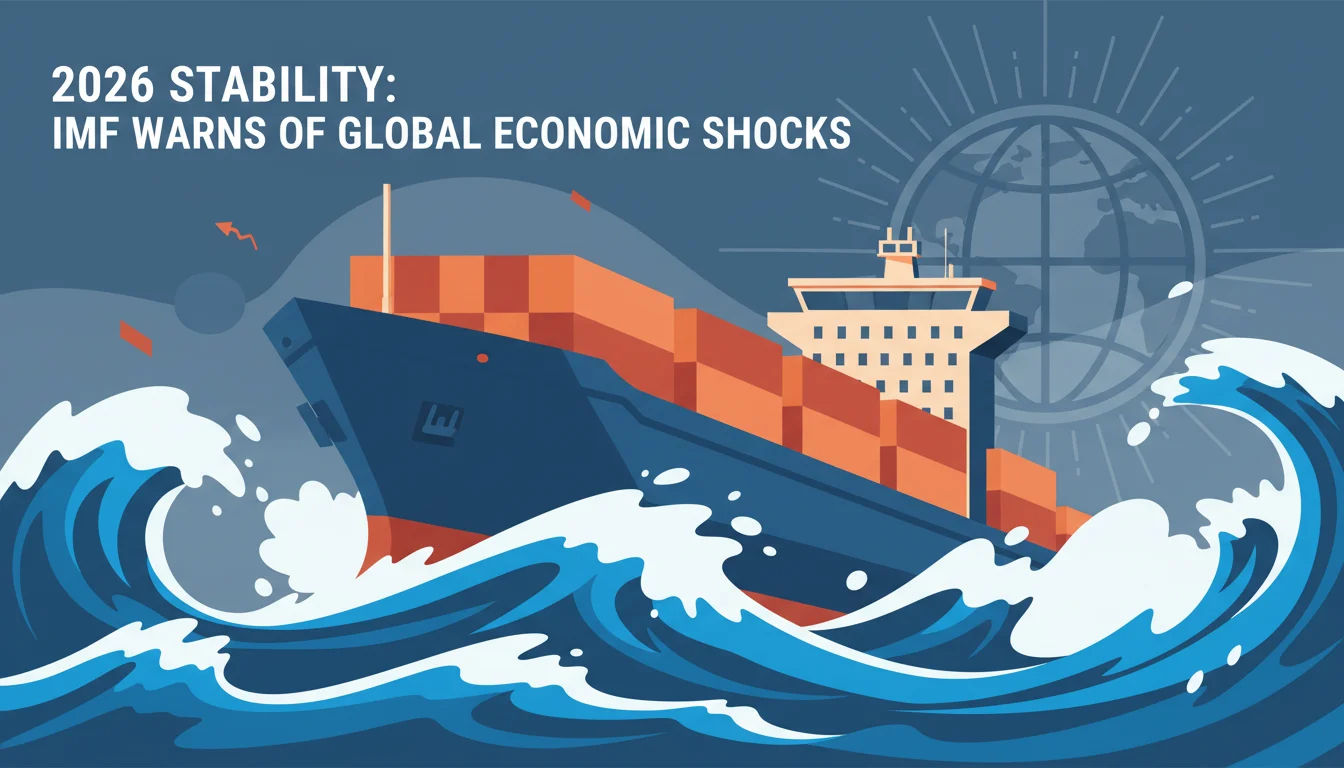
You can’t have a healthy economy while ignoring what’s happening in the world. We see it again and again. Look at the immediate hit from the 2022 energy crisis that the war in Ukraine made so much worse, or the supply chain problems that just won’t go away. The International Monetary Fund was blunt in its April 2026 report, directly connecting slower global growth to “heightened geopolitical fragmentation” and “elevated commodity price volatility driven by regional conflicts.” This is real. Car makers and electronics companies are still dealing with wild swings in material costs and delivery schedules, which hits their profits and drags down national economies. For example, the chaos in the Red Sea shipping lanes, a direct result of regional fighting, has forced about 25% of global container traffic to find new, longer routes, adding weeks to deliveries and jacking up freight costs by an estimated 15% on key Asia-Europe routes. This is a structural drag on the entire global economy.
Just look at the semiconductor industry, which is the canary in the coal mine for global trade. We’ve concentrated the most advanced chip manufacturing in just a few spots, mostly in East Asia, creating a terrifying single point of failure. A serious political event there would set off a global economic meltdown that would make the COVID-19 supply chain mess look like a minor inconvenience. The mad dash by the U.S. and the EU to build their own chip plants is a clear admission of how fragile global production is now. The billions being poured into new fabs in places like Arizona and Saxony are national security policies, plain and simple. Pretending these connections don’t exist is just asking for disaster.
Regional Flashpoints as Global Economic Accelerators
Problems in one part of the world don’t stay there anymore. Regional tensions that used to be considered local now have a terrifying ability to cause global economic pain. Take the ongoing instability in Africa’s Sahel region. It might seem far away, but it’s having a huge effect on everything from global migration and competition for resources to the black market for minerals we need for green tech. The United Nations Office for West Africa and the Sahel (UNOWAS) reports a 30% jump in internally displaced people there since 2024, which puts a massive strain on aid and just creates more instability. This tragedy has an economic cost, too: it wrecks farming, destroys infrastructure, and causes a brain drain that kills regional growth and makes everyone more dependent on foreign aid.
At the same time, the constant proxy wars and simmering conflicts in the Middle East keep a dark cloud over the world’s energy markets. The big shocks of the early 2020s have calmed down a bit, but the risk is always there. Any real escalation in the Persian Gulf could send oil prices through the roof and tip energy-hungry economies straight into a recession. Critical shipping lanes like the Strait of Hormuz are still major chokepoints. Even a minor incident there can cause panic buying in the commodity markets, showing just how twitchy everyone is about politics in the region. Writing these conflicts off as “local issues” is foolish. They’re a fundamental part of today’s global economic reality.
The Imperative for Resilient and Diversified Strategies
So what do we do about this mess? We have to build resilience and diversify, both in our economies and our diplomacy. For countries, this means ditching the old religion of chasing economic efficiency above all else. The obsession with finding the cheapest possible production, which led to dangerously centralized global supply chains, has turned out to be a massive weakness. Governments need to actively push for diversified critical supply chains, even if it makes things a little more expensive at home. This means stockpiling essential goods, investing in domestic manufacturing, and building trade relationships with a wider group of stable countries. The 2020s, when we couldn’t get everything from masks to microchips, should have burned a lesson into every policymaker’s brain: just-in-time inventory is a huge risk when the world stops working.
Diplomatically, the only viable strategy is proactive engagement. Hiding behind our borders won’t work. Yes, ideological divides are real, but our shared global problems require a practical approach. We have to strengthen international groups (even the flawed ones) and find common ground on things like climate change, pandemic planning, and keeping nukes out of more hands. The urge to retreat into nationalism during uncertain times is understandable, but it just makes everything more dangerous. A collective security agreement, even a messy one, is better than a global free-for-all. Countries need to invest in their diplomats, get better intelligence, and keep lines of communication open, even with adversaries, to stop small problems from becoming catastrophic crises. It’s a hard job, but the alternative is much, much worse.
Some people still bring up the old theory that deep economic ties prevent war. While trade can create shared interests, recent history proves that’s no guarantee. National security or ideological goals often win out over economic logic. Besides, economic links can be turned into weapons through sanctions and trade wars, making interdependence just another arena for competition. The idea that globalization automatically leads to peace is a nice story that has been completely discredited by reality. We have to accept that economic connections, while often good, don’t create stability. They just change the field of the power struggle.
The way to a more stable world isn’t through wishful thinking. We need a brutally honest assessment of where we are: constant economic shocks, driven by regional conflicts, are the new normal. Governments, businesses, and international groups have to adapt by building tougher, more diversified systems and pursuing smart, pragmatic diplomacy. The future will be shaped by those who get this and build resilience into the core of their societies and economies.
How do regional tensions directly impact global supply chains?
They disrupt key shipping routes, as we’ve seen with the Red Sea crisis, which leads to longer transit times and higher freight costs. Tensions can also halt the production of critical raw materials or components in a specific area, causing shortages and price spikes for entire industries around the world. For instance, if a region rich in rare earth minerals becomes unstable, the global electronics sector would be hit hard.
What role do energy markets play in geopolitical stability?
Energy markets and geopolitics are completely intertwined because so many big energy producers are located in politically unstable places. Any disruption to oil or gas supplies, whether from conflict or political games, can trigger global price hikes. This leads to inflation, slows down economies, and makes countries scramble for resources, which can create even more international tension.
What strategies can nations employ to mitigate the economic impact of geopolitical instability?
They can diversify their supply chains, bring production of critical goods back home, build up strategic reserves of key commodities, and expand trade with a wider group of politically stable countries. Investing in renewable energy is also a smart move, as it cuts down dependence on volatile fossil fuel markets controlled by unstable regimes.
How does climate change intersect with geopolitical stability and economic shocks?
Climate change is a threat multiplier. It makes existing tensions and economic problems much worse. When climate change causes shortages of things like water or farmland, it can directly lead to conflict and force people to migrate. Extreme weather events also break supply chains, wreck infrastructure, and create huge economic losses, putting more strain on governments and international relationships.
Is economic interdependence always a force for peace?
No. While it can create shared interests that discourage conflict, it’s not a magic bullet for peace. National security, ideology, or internal politics can easily override economic common sense. And as we’ve seen, economic ties can be weaponized with sanctions or trade barriers, turning interdependence into another tool for geopolitical fights instead of a path to cooperation.


